

As AI continues to reshape industries, it introduces both unprecedented operational advantages and complex security challenges. This reality raises a critical question for modern workforces: how should AI training effectively address cybersecurity risks within real professional contexts?
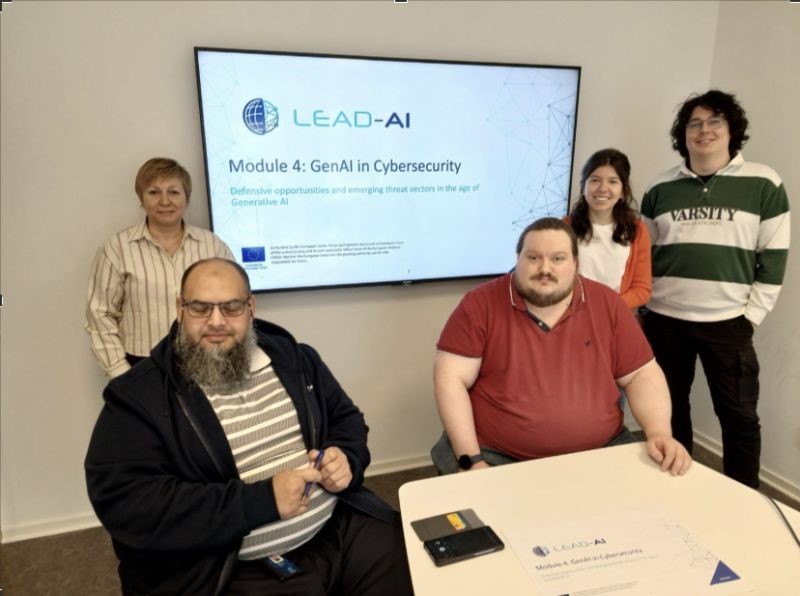
To address this challenge, the LEAD-AI project recently hosted a targeted co-design session at Halmstad University. This collaborative workshop brought together domain experts and cybersecurity professionals to evaluate, challenge, and validate our curriculum approach for integrating Generative AI (GenAI) into cybersecurity training.
The interactive session provided invaluable first-hand insights from practitioners who manage digital risks daily. The participants highlighted several pillars that must define any successful AI cybersecurity curriculum:
- Flexible learning pathways: training must accommodate different professional realities. There is a clear demand for distinct pathways that separate formal, long-term educational structures from rapid, targeted upskilling modules designed for active professionals.
- Scenario-based learning: rather than abstract theories, the curriculum needs to be built around realistic cybersecurity cases and case studies that mirror the actual threats organizations face.
- Core concepts over tool specificity: because the AI software ecosystem evolves rapidly, training should focus on foundational concepts, logic, and architectural security rather than becoming overly reliant on specific, transient software tools.
- Integrated practical activities: hands-on experience is vital. Experts recommended embedding direct tactical exercises – such as live phishing simulations and threat-modeling labs—to solidify theoretical knowledge.
- Recognition via micro-credentials: for professional upskilling, traditional grading is less relevant than verifiable skills recognition. Utilizing micro-credentials offers a compact, standardized way for professionals to demonstrate their verified capabilities to the market.
Ultimately, the insights gathered at Halmstad University ensure that the LEAD-AI framework remains practical, adaptable, and grounded in reality. Rather than developing theoretical models, the consortium is actively utilizing this expert feedback to optimize our upcoming training modules. This collaborative approach guarantees that LEAD-AI will deliver immediate, resilient value to cybersecurity professionals and adult learners throughout Europe.